


FacMet
0.00.00 Reviews
App Specs
- Version
- 1.3.0
- Updated On
- License
- Free
- Downloads
- 10,000+
- Developer
- ALLEN PRODUCTION
- Categories
- Lifestyle
- Platform
- Android
Screenshots



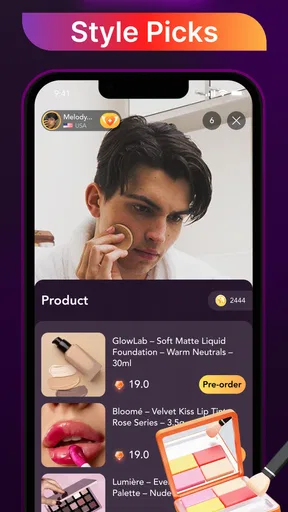
 Analysis by AppCompare
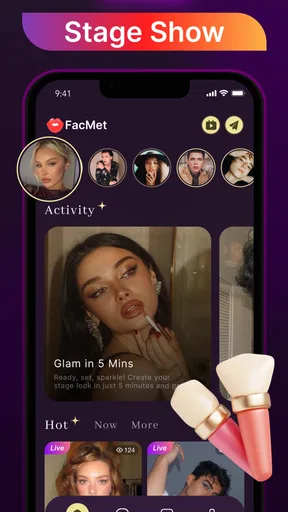
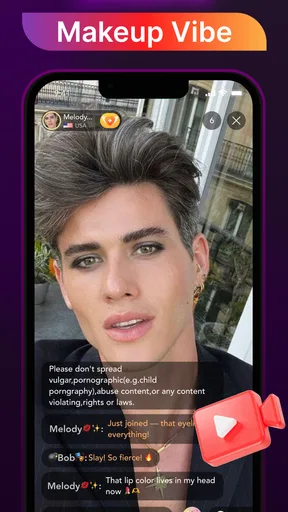
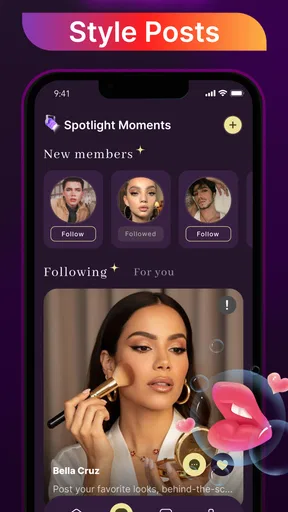
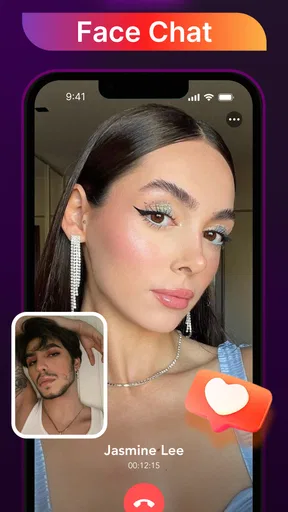
FacMet caught my attention because it sits in an unusual space between a lifestyle tool and a social experience. Rather than presenting itself as a conventional beauty guide, it centers on makeup-related chat and calls, giving the idea of trying looks a more conversational feel. I spent time considering how it works not only during the first burst of curiosity, but also after the novelty wears off. That distinction matters, because an app can be entertaining for an evening without earning a permanent place on a phone.
My overall impression is that FacMet is most appealing to people who enjoy discussing makeup in a relaxed, interactive setting. It is less convincing as a replacement for a dedicated tutorial library, a professional consultation, or a simple camera editor. The experience depends heavily on whether you actually want the social side of beauty discovery. If you do, the app has a clear reason to exist. If you only want quick product advice or a step-by-step routine, the usual alternatives may be more efficient.
From first-week curiosity to lasting value
I find lasting value easier to judge when I look beyond how novel a beauty-focused chat or call feels at first. FacMet makes the most sense as an occasional companion for a specific choice, so I’d notice whether it helps me reach a decision without making me second-guess myself or spend unnecessarily. That longer view leads naturally to a more practical question: how comfortably can different people take part?
Why the first sessions feel different
The first-week appeal comes from the combination of two familiar activities: experimenting with appearance and talking to other people. Many makeup apps focus on visual effects, while many social apps treat beauty as just one topic among countless others. FacMet places those ideas closer together. That makes the opening experience feel more personal than scrolling through static inspiration.
I can easily imagine opening it before a night out, while deciding between two makeup styles, or during a quiet evening when I want feedback rather than another one-way tutorial. The conversational angle changes the pace. Instead of simply copying a look, I can think about why it suits a particular occasion, what feels comfortable, and which parts are realistic with the products already in my drawer.
That is an important strength. Makeup advice often fails because it assumes unlimited time, ideal lighting, or a large collection of products. A chat or call can encourage more practical questions. Someone may want a softer version of a dramatic look, help choosing a color for daytime, or reassurance that an imperfect result is still wearable. FacMet is at its best when it supports that kind of decision-making rather than chasing a flawless image.
The app is free to install, which makes trying it less of a commitment. It is aimed at a Teen audience, so I would still treat conversations thoughtfully and avoid sharing personal details too quickly. The free entry point is useful for testing whether the social format suits you before spending anything. In my view, that trial period should be used deliberately: explore the main interaction, notice how comfortable the conversations feel, and decide whether you would return without being prompted.
Worth Reading Before You Choose

Flipboard Shows What News Apps Must Do Beyond the Feed

Switching to Android Auto Means Rethinking Your Driving Routine

Google Calendar Makes a Crowded Week Easier to Manage

Ludo King Makes the Most of the Minutes Between Plans

Baby Panda World Brings Quick Play to Modern Phones, but Its Game Library Feels Busy

ESPN’s Live Game View Makes Following Close Games Easier
A realistic everyday scenario
Picture a student getting ready for a family event after classes. She has limited time, a few familiar products, and no interest in watching a long tutorial. She opens FacMet to discuss whether a bold lip will work with the eye makeup she has already chosen. The useful outcome is not necessarily a perfect transformation. It may simply be narrowing the decision, avoiding a combination she will dislike later, and feeling more confident before leaving home.
Another realistic use is a low-pressure preparation session with a friend who lives elsewhere. Instead of sending several photos back and forth, a call can make the exchange quicker and more natural. That is where the app feels more distinctive than a standard beauty reference tool. The value comes from reducing hesitation and making experimentation feel shared.
There is also a useful workflow for beginners: start with one question, test one change, and then stop. For example, ask about balancing a strong eye look, try that adjustment, and avoid turning the session into an endless search for a new face. This keeps the app from becoming a source of comparison. I found that the best use is focused and short, with a clear decision at the end.
What the first week does not prove
Early excitement can be misleading. A new social format naturally creates curiosity, and makeup is visually engaging enough to make the first sessions feel productive even when the advice is not especially deep. I would not judge the app solely by how entertaining it feels on day one. The better test is whether it helps with recurring choices: everyday routines, event preparation, confidence when trying something unfamiliar, or conversations that you genuinely want to continue.
The developer behind the app is ALLEN PRODUCTION, and the current release is version 1.3.0. On Android, it requires at least Android 7.0, so it should be accessible to people using older supported devices. The app has passed the early discovery stage with over ten thousand installs, but I would not treat that figure as proof that it will suit every user. The more relevant question is whether its particular chat-and-call format matches your habits.
Where it fits beside familiar alternatives
Compared with a conventional tutorial app, FacMet offers more interaction but potentially less structure. A tutorial is usually better when I want a repeatable sequence: prepare the skin, apply one product, blend, check the result, and move on. FacMet is better when I am unsure what direction to take or want another person’s reaction. Those are different needs, and choosing the wrong tool can make the experience feel unnecessarily slow.
Compared with a social network, FacMet appears more focused. A general platform may offer a larger stream of creators, trends, and comments, but it can also bury practical advice under entertainment. A focused beauty conversation has a better chance of staying relevant to the decision in front of me. The trade-off is variety and scale: a broad platform may be more useful when I want to browse many techniques or compare a wide range of products.
Compared with a virtual makeover tool, the conversational approach is more grounded in discussion than in instant visual effects. A filter can quickly show a possible color or style, but it cannot replace asking whether that look is comfortable for work, suitable for a particular setting, or manageable with limited practice. I would use a visual tool for rapid experimentation and FacMet for reflection, feedback, and shared preparation.
Month-to-month value depends on a real routine
After the first month, the app needs to become part of an actual habit rather than an occasional novelty. I see three sustainable patterns. The first is event planning: opening it before parties, celebrations, photographs, or other moments when appearance matters more than usual. The second is gradual learning, where each conversation focuses on one technique instead of trying to rebuild a complete routine. The third is social use with people who already enjoy discussing beauty.
That last pattern may be the strongest. An app based around chat and calls becomes more valuable when I have a reason to return to particular conversations or use it with familiar contacts. Without that social continuity, the experience may start to resemble a beauty-themed browsing session, and the difference from other apps becomes less pronounced.
A practical way to preserve value is to keep a small personal record outside the app. I might note which color combinations worked, which steps took too long, and which suggestions did not suit my face or schedule. This turns casual conversations into a learning process. It also prevents repeatedly asking the same question without building personal knowledge. The app can support discovery, but I still need to decide what belongs in my routine.
I would also set a boundary around frequency. Opening FacMet every time I feel uncertain about my appearance could encourage dependence on outside approval. Using it at selected moments, such as when trying a genuinely new look or preparing for an important occasion, keeps the benefit while protecting my own judgment. That balance is one of the less obvious considerations with any appearance-focused social product.
The cost of continued use
Although the app is free, it includes in-app purchases ranging from $0.99 to $99.99 per item. That is a wide enough range to make restraint important. I would not purchase anything simply because a conversation feels engaging or because the app creates urgency around changing my appearance. Before paying, I would ask whether the purchase offers repeat value or merely extends a moment of curiosity.
For a casual user, the free experience may be enough to decide whether the concept works. For a regular user, the sensible approach is to identify one specific benefit worth paying for and ignore everything else. I would avoid treating the highest-priced option as a shortcut to better advice. A paid feature can be convenient, but convenience is not the same as expertise, suitability, or lasting improvement.
This is also where FacMet differs from a traditional tutorial app with a predictable subscription or a fully free reference library. The purchase model may feel less transparent to someone who prefers to know the complete cost before developing a habit. I would check each item carefully before confirming a transaction and keep the app’s role in perspective: it should complement a routine, not pressure me into spending to feel presentable.
Maintenance is mostly behavioral
The maintenance burden is not only about updates or storage. It is about managing attention, expectations, and the quality of conversations. A social beauty app can become tiring if every return visit leads to another trend, another comparison, or another suggestion to change something that was already working. I would keep the experience healthier by arriving with a specific purpose and leaving once that purpose is met.
There is a simple maintenance routine I would recommend. Before a session, decide whether the goal is advice, inspiration, or contact with another person. During the session, keep the question narrow and mention practical limits such as time, comfort, and available products. Afterwards, test one idea in ordinary conditions rather than judging it immediately under perfect lighting. This workflow makes the app more useful and reduces the chance of collecting advice that never becomes action.
Privacy awareness is part of that maintenance too. Because chat and calls are personal forms of communication, I would avoid revealing my address, school details, daily schedule, or other information that is unrelated to makeup. I would also be cautious about sending images that include private surroundings. The Teen content rating makes this especially relevant for younger users, who should involve a trusted adult if a conversation becomes uncomfortable or someone asks for information that feels inappropriate.
Another maintenance issue is emotional rather than technical. Appearance discussions can be encouraging, but they can also make small imperfections seem more important than they are. If I notice that using the app leaves me more self-conscious instead of more confident, that is a strong reason to reduce usage. No beauty tool deserves a permanent place on a phone if it damages the user’s mood.
Where fatigue starts to appear
The first source of fatigue is repetition. Makeup conversations can circle around the same popular looks, colors, and transformations. If FacMet does not keep giving me fresh, practical reasons to return, the chat-and-call concept may begin to feel like a novelty layer over familiar beauty content. The solution is not to use it more often; it is to use it for narrower and more meaningful questions.
The second is social uncertainty. A call requires more commitment than opening a tutorial, and not everyone wants to speak while getting ready. Some users prefer quiet experimentation, especially when they are tired or still learning. For them, a written guide or saved video may be more comfortable. FacMet’s interactive strength becomes a weakness when the user wants complete control over timing and privacy.
The third is the gap between inspiration and execution. A conversation can make a look sound simple, but applying it to my own face, products, skill level, and lighting may produce a different result. I would treat advice as a starting point rather than a guarantee. Testing one small change first is less frustrating than attempting a dramatic makeover immediately before an important event.
There is also the possibility of purchase fatigue. The presence of items priced from less than a dollar to nearly a hundred dollars means I would pay attention to how often the app presents optional spending. Even when each individual purchase seems reasonable, repeated small decisions can change the feeling of a supposedly free app. Users who dislike in-app purchasing should approach FacMet cautiously and establish a personal spending limit before exploring paid options.
Who should make room for it
I would recommend FacMet to someone who enjoys makeup as a social activity, likes receiving conversational feedback, and wants help making choices rather than following a fixed lesson. It may also suit a beginner who feels intimidated by polished tutorials and would benefit from discussing a look in everyday language. People preparing for occasional events could find the app useful without needing to make it a daily habit.
It is less suitable for someone seeking professional-level instruction, a searchable product database, or a completely private beauty workspace. It is also not my first choice for a person who wants quick, silent, step-by-step guidance. A standard tutorial platform will usually be more efficient in that situation, while a basic camera editor may be better for testing visual possibilities without entering a conversation.
I would be particularly careful recommending it to younger users without discussing safe online behavior first. The Teen rating gives a useful general signal, but it does not remove the need for judgment in personal chats and calls. The best experience is one where the user understands that friendly conversation does not automatically mean trust, and where blocking or ending an uncomfortable interaction is always acceptable.
My long-term verdict
FacMet earns lasting space only when I use it as a focused companion for beauty decisions and social connection. Its strongest idea is not simply makeup, and not simply calling; it is the opportunity to make appearance experimentation feel less solitary. That can be genuinely valuable before an event, during a learning phase, or whenever a second opinion helps turn uncertainty into a manageable choice.
Still, I would not keep it installed out of habit alone. The app has to justify each return by helping me do something specific: choose a look, understand a technique, share preparation with someone, or build confidence without encouraging comparison. If sessions become repetitive, emotionally draining, or centered on purchases, removing it would be the sensible decision.
For me, the lasting verdict is cautiously positive. The free starting point and accessible Android requirement make it easy to explore, while the social focus gives it an identity beyond ordinary beauty references. Its limitations are equally clear: it may lack the structure of tutorials, the breadth of general social platforms, and the quiet simplicity of a private makeover tool. I would recommend FacMet to the right person, but with a clear rule: keep the conversations purposeful, protect personal boundaries, and judge the app by the confidence and practical value it adds after the novelty fades.
The best reason to keep using it is not endless beauty content; it is better decisions in the moments when another perspective genuinely helps.
Pros
- Simple interface makes core features easy to find.
- Useful for staying connected with friends and contacts.
- Profile tools help users share selected personal details.
- Runs smoothly on most modern Android and iOS devices.
- Notifications help you keep up with new activity.
Cons
- Some features may require creating an account.
- Privacy settings may take time to understand fully.
- User activity can vary depending on your location.
- Frequent notifications may become distracting.
- The app may use additional storage as cached content grows.
FAQs for FacMet
What is FacMet, and what can I use it for?
FacMet is an app designed to provide users with tools for connecting, interacting, or managing content through a mobile device. Its exact usefulness depends on the version and features available in your region, so it is worth reviewing the official description before installing. During our review, we recommend checking the main sections, supported functions, and account requirements to confirm that the app matches your expectations.
Is FacMet free to download and use?
FacMet may be available as a free download, but some features can depend on advertising, optional purchases, subscriptions, or limits placed on free accounts. Before using the app extensively, open its store listing and review the pricing information carefully. Also check whether payments renew automatically, what each purchase includes, and whether certain tools are restricted unless you upgrade.
Does FacMet require an account or personal information?
Depending on the features you want to use, FacMet may ask you to create an account and provide information such as an email address, username, profile details, or other registration data. Before signing up, read the privacy policy and permissions requested by the app. Avoid sharing sensitive information unless it is clearly necessary, and use a strong, unique password for your account.
Is FacMet safe and compatible with my Android or iPhone?
FacMet should be downloaded only from a trusted source, such as Google Play or the Apple App Store, where you can verify the developer, ratings, update history, and user feedback. Compatibility depends on your operating system and device model. Check the minimum Android or iOS version before downloading, and review the requested permissions to ensure they are reasonable for the app’s functions.
What should I do if FacMet does not work correctly?
If FacMet crashes, loads slowly, or fails to provide a feature, first make sure the app and your device software are updated. A stable internet connection, restarting the app, and clearing temporary data may also help on Android. If the problem continues, consult the app’s support options, check recent user reports, and contact the developer with your device model and a clear description of the issue.


